
Why Authenticity Matters More Than Perfection
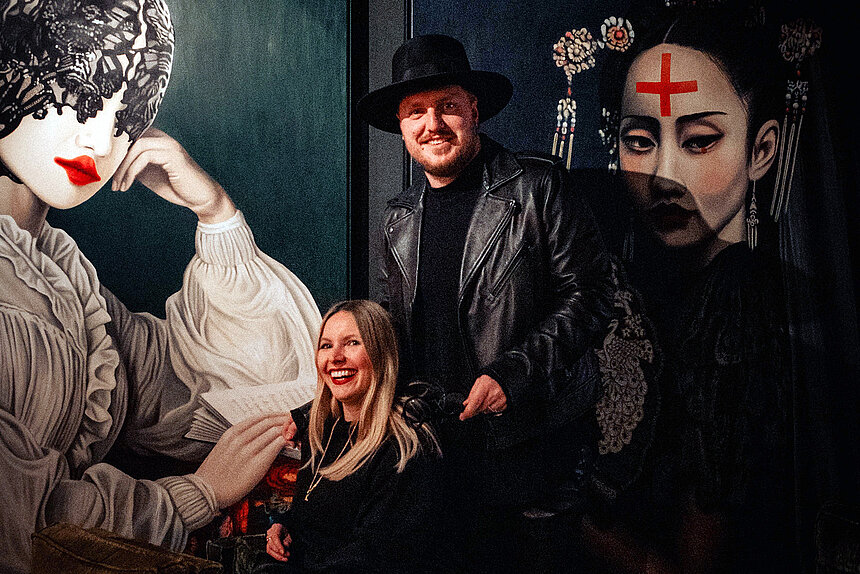
How can hotels truly reach their guests today—and what role do influencers and content creators play? In this interview, Laura Austermann and Francesco Alfredo Seßler from ARTIS Advertising share practical insights and hands-on recommendations from their day-to-day work.
What is the key difference between an influencer and a content creator?
ARTIS Advertising: An influencer’s primary focus is their own reach. They are a personal brand and act as a multiplier—distributing content to their community. While an influencer can also be a content creator, a content creator is not automatically an influencer.
A content creator produces content on behalf of the hotel. Here, quality and output are the priority. They act as an external producer of Reels, photos or TikTok videos, capturing the hotel in an aesthetic style—sometimes featuring themselves, sometimes focusing entirely on the setting.
In which situations should a hotel choose an influencer, and when a content creator?
ARTIS Advertising: These are two completely different approaches. An influencer brings their own reach and followers. You engage them for a campaign push—to access new target groups and generate awareness.
A content creator is the right choice if the hotel simply needs high-quality material—videos and photos—for its own channels such as Instagram, TikTok, LinkedIn or its website.
What goals can realistically be achieved with each? Are there expectations you cannot fulfil?
ARTIS Advertising: A creator delivers raw material and ready-to-post content. If the hotel doesn’t actively use that content afterwards, the impact will be lost. In the past, a hotel photographer would come once a year for print advertising—we are essentially the modern equivalent, combining photography and video to capture authentic moments for social media. The goal here is simply excellent content for your own channels.
With influencers, you are essentially buying reach. Expecting an influencer to deliver a large volume of direct bookings immediately is unrealistic. Influencer marketing requires both budget and time. Realistic objectives are brand awareness and reach. We always recommend starting with smaller collaborations to see who truly fits the hotel.
How can hoteliers determine who fits their brand stylistically and personally? What questions should they ask themselves?
ARTIS Advertising: With content creators, the focus is primarily on visual style. Does the aesthetic of their videos and photos align with your social media presence? If the creator appears on camera (user-generated content), it must match the hotel. For example, if you run a three-star property, a creator showcasing luxury designer accessories may feel inauthentic.
Before booking, always review previous work and pay attention to voice and tone, especially for spoken videos. Standard German (or in international contexts, neutral English) is usually the safest option unless the campaign is purely regional.
With influencers, the selection is more complex. Key factors include: what values and attitudes does the person represent? If someone gains attention through controversial media appearances, any negative publicity can reflect on the hotel. Content creators usually don’t publish on their own channels, so their personal image is less critical. With influencers, brand fit must be absolute.
And the influencer’s audience must also match, correct?
ARTIS Advertising: Absolutely. Beyond the softer factors, you need to look at hard data: actual reach and story views, as well as where the audience is based. If a German influencer primarily has followers in the US or India, that offers little value for a local hotel. Age and behaviour of the audience must also be analysed carefully in advance.
How important is follower count compared to tone and style?
ARTIS Advertising: Follower numbers have become secondary. What really matters are views and engagement rate—how actively people interact with the content through likes, comments or shares. Some accounts with relatively few followers achieve enormous reach through engaging or humorous content. Without interaction, the impact is lost.
How can the value of content be measured—beyond bookings?
ARTIS Advertising: For influencer collaborations, reporting should be agreed in advance. After the campaign, the hotel receives key metrics: views, likes, comments, shares and saves. Saves are particularly valuable—someone may not book immediately but could return months later.
Click-through rate is also important—how many users actually click on the booking link. However, it’s important to be fair: if the hotel’s booking process is complicated or promoted offers are missing on the website, users will drop off. That’s not the influencer’s fault.
For content creators, success is best measured through a before-and-after comparison: how does the new video content perform compared to previous static photo posts?
Important practical tip: Always request content from influencers for approval before publication. Nothing is more frustrating for a hotel manager than seeing an unmade bed in the final video.
What makes hotel content credible—and what feels like pure advertising?
ARTIS Advertising: The trend is clearly moving away from perfectionism towards authenticity. Generation Z in particular is looking for real experiences, behind-the-scenes insights, approachable staff and genuine emotions.
For hoteliers, this means: don’t stage a room with decorations that regular guests would never see. As content creators, we want to be treated like normal guests—no special table settings, no curated menus. We want to capture exactly what a real guest would experience. This kind of ‘staged perfection’ no longer works on social media. Less artificial, more real—that’s the key.
Which social media trends are currently having the greatest impact on hotels?
ARTIS Advertising: Firstly, the shift towards smartphone content rather than high-end productions like drone footage. People want to see what it actually looks like.
Secondly, the speed of change. You don’t need to follow every TikTok trend—take a step back and select two or three that truly fit your brand.
A fundamental shift is the expectation of real-time updates. Younger audiences use Instagram and TikTok like search engines and often don’t even visit traditional websites. They expect up-to-date information there. If there’s a new menu today, they want to see it in Stories. Instagram has effectively become the hotel’s digital shop window. If your latest post is from three years ago, you risk losing potential guests.
If a hotelier wants to work with content creators like you—what are the basics they need to have in place?
ARTIS Advertising:
- Understand the concept: A content creator provides material for your channels—they don’t bring their own reach.
- Prepare your channels: An Instagram or TikTok account must already exist or be about to launch, otherwise the content has no impact.
- Define your focus: The hotel needs clarity on what it wants to showcase (e.g. restaurant, spa, or specific packages).
On-site, we don’t need a ‘babysitter’. If expectations are clearly defined in advance (for example filming the spa when it’s empty), content creators work best independently.